
Boat removal and disposal in Inverness Highlands North, FL

- The Florida Spirit
Boat removal service in Inverness Highlands North
An old boat can sit for years before anyone decides to deal with it. The hull softens, the trailer tires fail, the engine no longer turns over, and what was once a weekend project becomes something that takes up space and worries the owner. If that describes a vessel in Inverness Highlands North, a clear removal plan starts with accurate information about the boat, where it sits, and who has the authority to release it.
Florida Boat Services reviews boat-removal requests throughout Florida. This page covers unwanted, damaged, non-running, or end-of-life boats, including fiberglass powerboats, sailboats, and personal watercraft. Depending on what is confirmed in your quote, the work can include loading, dismantling, hauling, trailer handling, and disposal. We do not claim a local office in Inverness Highlands North, and availability for each address is confirmed individually after review.
Because the community sits in Citrus County near the Tsala Apopka Chain of Lakes, some owners will be dealing with a boat that was used on those waters and later stored at a home or on a private lot. Waterway proximity is only background. What matters for planning is the condition of the vessel and the route a hauling setup would need to reach it.
Conditions we review
- Non-running or abandoned-in-place boats that can no longer be moved under their own power.
- Damaged hulls, including soft decking, cracked fiberglass, or storm damage.
- Boats on trailers, where tire, axle, and hitch condition affect handling.
- Boats without trailers, which may require different loading steps.
- Vessels in the water or partly submerged, which are reviewed as recovery projects rather than ordinary removals.
Land removal versus submerged recovery
A boat sitting in a driveway, side yard, or storage lot is a different job from one that has sunk or is taking on water. Land removal depends mostly on ground conditions, gate width, overhead clearance, and the vessel's weight. Submerged recovery adds questions about depth, position, fuel or fluid concerns, and how the vessel can be reached. Tell us plainly which situation you have so the scope is not guessed at later.
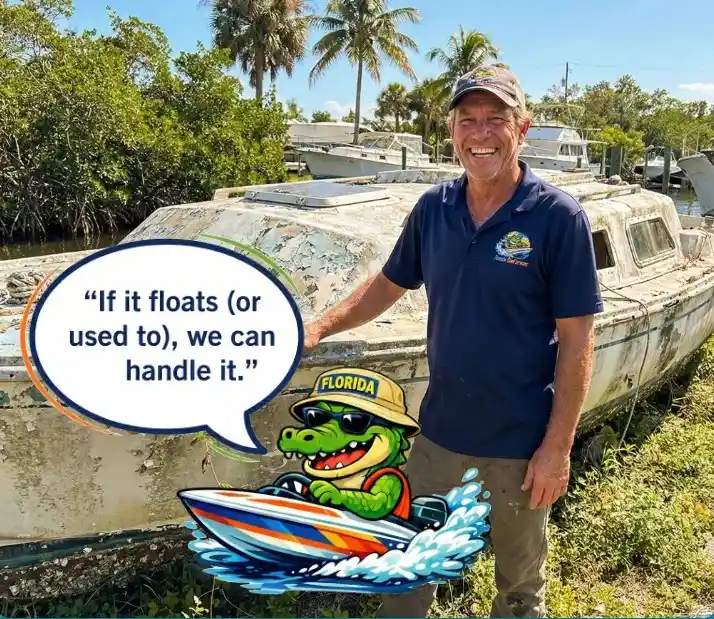
- All Vessel Types
Boat disposal scope
Disposal is not a single step, and it should not be vague in a quote. Before scheduling, the written scope should state which parts of the job are included: loading, on-site dismantling, hauling, trailer handling, transport, and final disposal. Anything not listed should be treated as not yet agreed.
Details that affect access and scope
- Size and type: approximate length, beam, and whether it is a runabout, pontoon, sailboat, or PWC.
- Construction: a fiberglass hull, for example, may be handled differently from a smaller aluminum or inflatable craft.
- Trailer status: whether a trailer is present, rolls freely, and is part of the removal.
- Access route: driveway surface, soft ground, tight turns, low branches, gates, and where equipment could stage. Keep the agreed path clear before work begins.
- Authorization: proof that the person requesting removal is the owner or is authorized to release the vessel.
- Site rules: HOA, property management, or facility restrictions that limit work hours or access.
If you manage the property
Property managers, storage facilities, and waterfront property representatives should send the site contact, any facility restrictions, written authorization, and a complete list of items to be removed. Clarify what must stay and what must leave so disposal responsibility is not left open.
How cost is determined
Boat disposal cost is project-specific. Pricing depends on size, condition, location, access, equipment needs, trailer condition, recovery requirements, transport, and disposal scope. A quote request is free, but removal, recovery, transport, and disposal are not automatically free. We do not publish flat prices, and we do not purchase vessels.
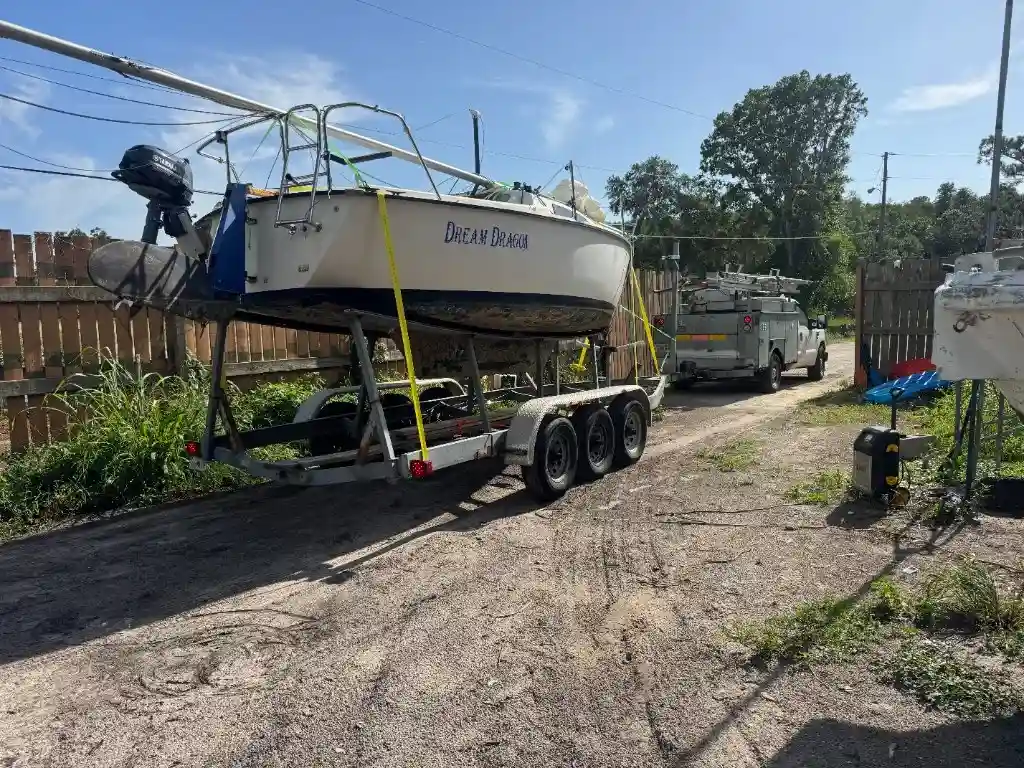
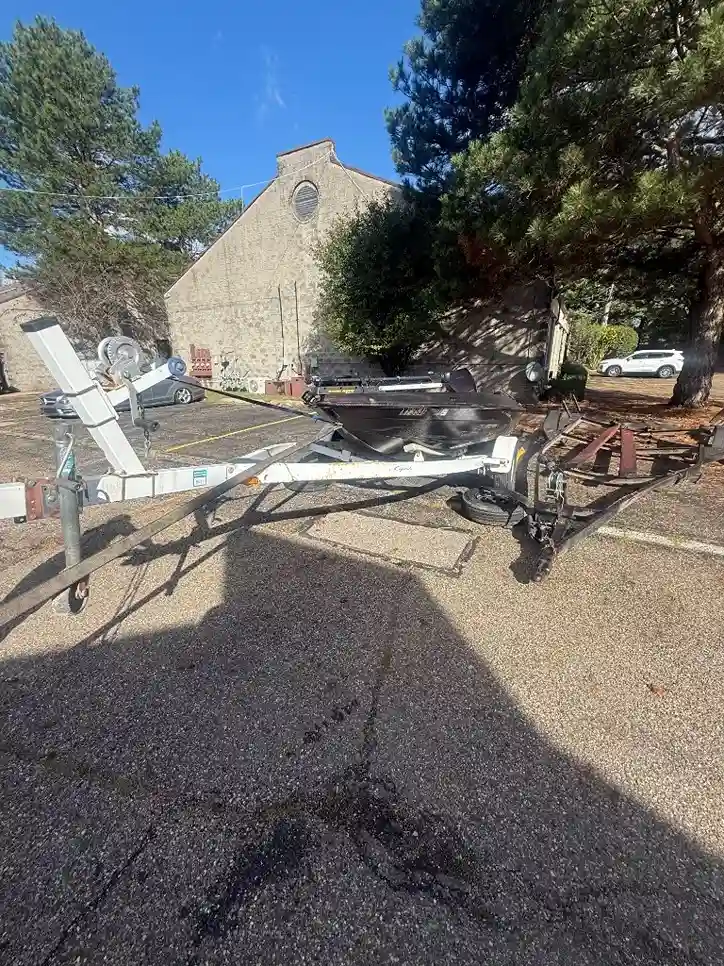
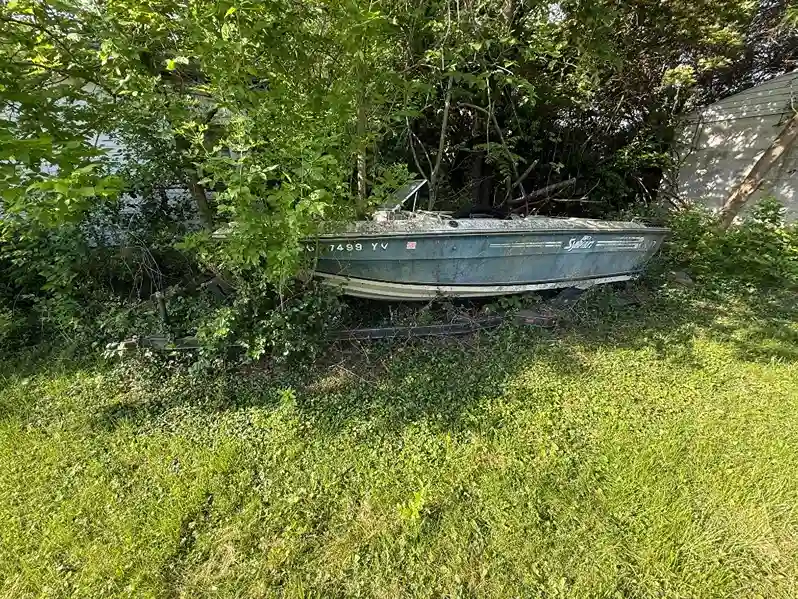
Request a boat removal quote
To get a useful estimate, gather a few things first:
- The vessel or PWC type, approximate dimensions, and condition.
- Whether a trailer is present and its condition.
- The exact location and how a vehicle would reach it.
- Who owns the boat or is authorized to approve removal.
- Safe photographs showing the whole vessel, the hull, the trailer, and the access route. Please do not climb on unstable decks or enter water to take them.
Send those details through our contact page to request a project-specific quote. We will review the scope, confirm availability, and define what the estimate includes before anything is scheduled.
If you are comparing nearby options, see our pages for Boat Removal & Disposal in Inverness and Boat Removal & Disposal in Hernando. Listing a nearby community does not mean service is available at every address, so each request is reviewed on its own facts. You can also browse the Florida service areas or return to the Boat Removal & Disposal service hub for the full service overview.
Common Removal Situations
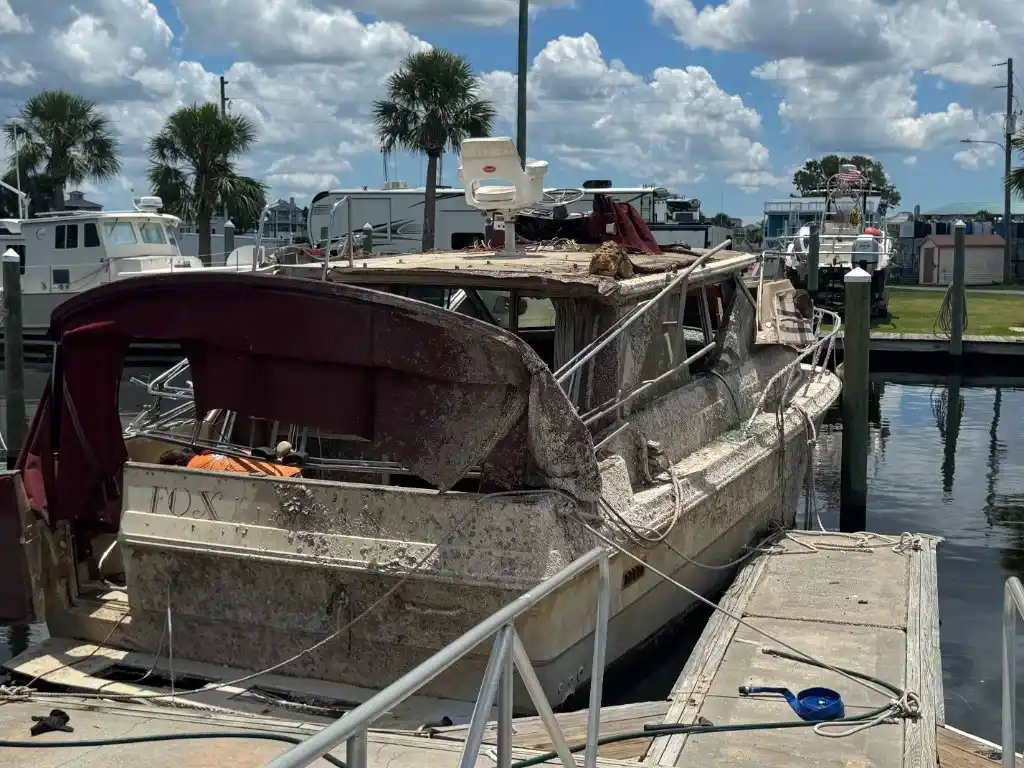
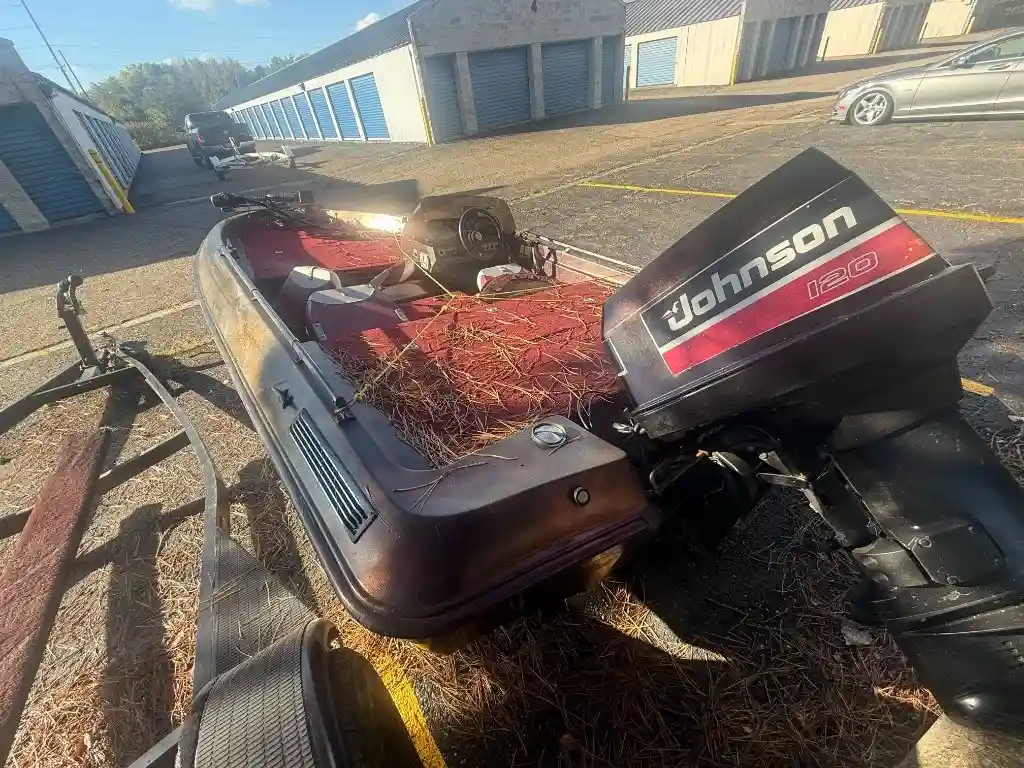
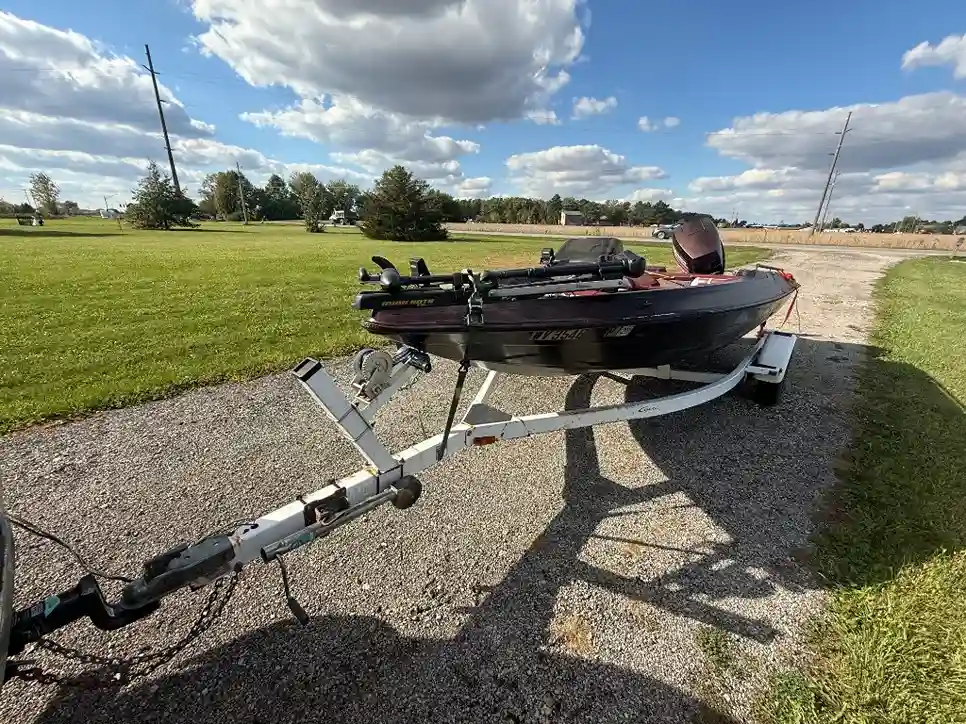
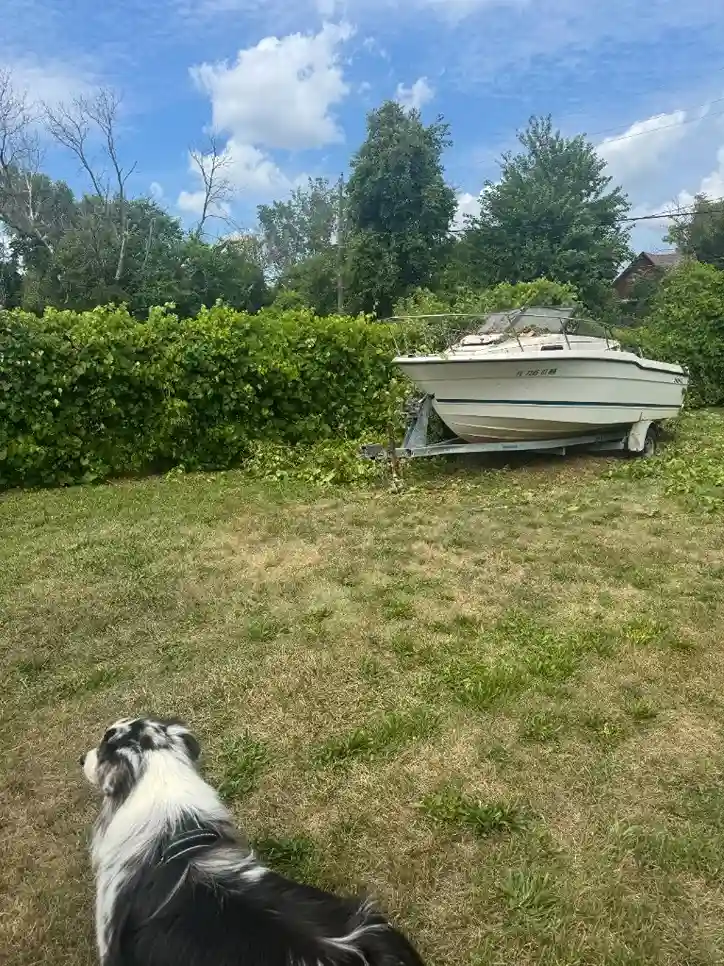
By the time a call comes in, the vessel has usually sat long enough to collect water, soften fiberglass, or sink into dirt. Crews handle all common disposal situations:
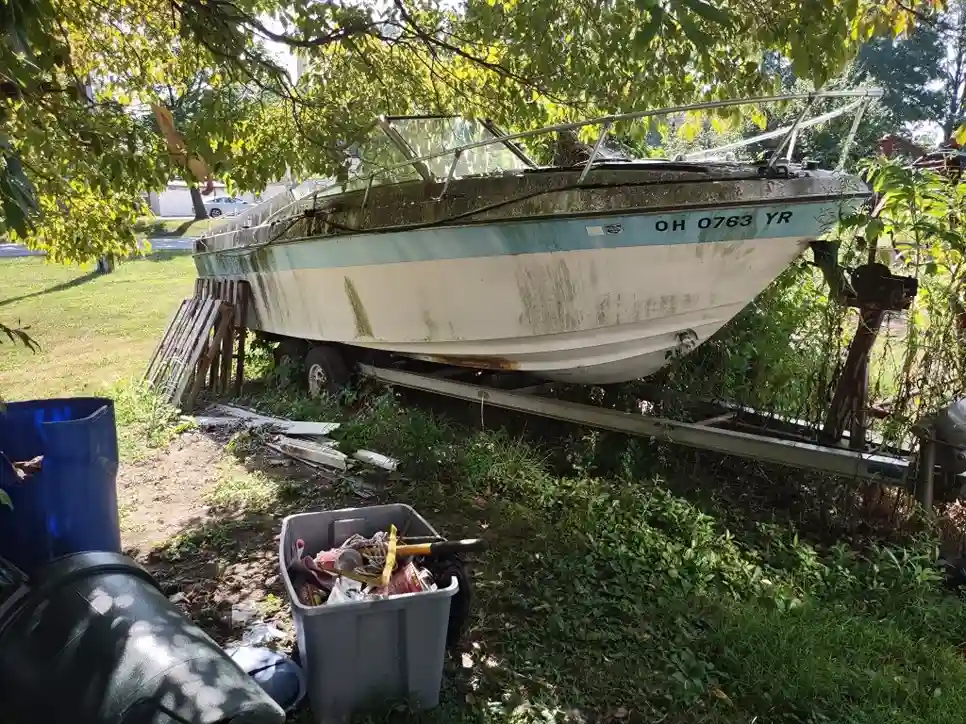
- Powerboats: Aging runabouts or cabin cruisers sitting on rotted trailers or failing blocks, no longer in use.
- Sailboats: Stripped or damaged hulls with cracked gelcoat, missing rigging, and rotted decks beyond repair.
- Derelict vessels: Craft abandoned at marina slips, left on land, or adrift and blocking water access.
- Unused boats: Intact vessels where the owner simply wants the hull removed to clear space.
- FAQ
Service Questions
Get answers to common questions about boat removal in Florida.

Ready to plan your boat removal?
Send current vessel, ownership, location, and access details with safe photographs for a project-specific estimate. The quote request is free, but the work is not automatically free. You can also call (904) 946-4709.
Hulls split, trailers rust through, and decks rot out. To clear yours away, describe the vessel and where it sits. Send a few photos of the boat and the access path to receive a quote before any work begins, then let the crew take it from there.