
Boat removal and disposal in Harbour Heights, FL

- The Florida Spirit
Boat removal service in Harbour Heights
A boat that no longer runs, no longer floats well, or no longer has a purpose tends to become a problem slowly. It sits on a trailer beside a garage, under a carport, or in a corner of a storage lot until someone has to decide what happens next. This page is for owners and authorized property representatives in Harbour Heights who need a clear plan for that decision.
Florida Boat Services reviews boat-removal and marine-removal requests throughout Florida. A boat removal service in this context covers unwanted, damaged, non-running, or end-of-life vessels. Depending on what is confirmed in your quote, the work may include loading, dismantling, hauling, trailer handling, and disposal. We do not operate a local office in Harbour Heights, and availability and final scope are confirmed project by project.
Boat conditions we review
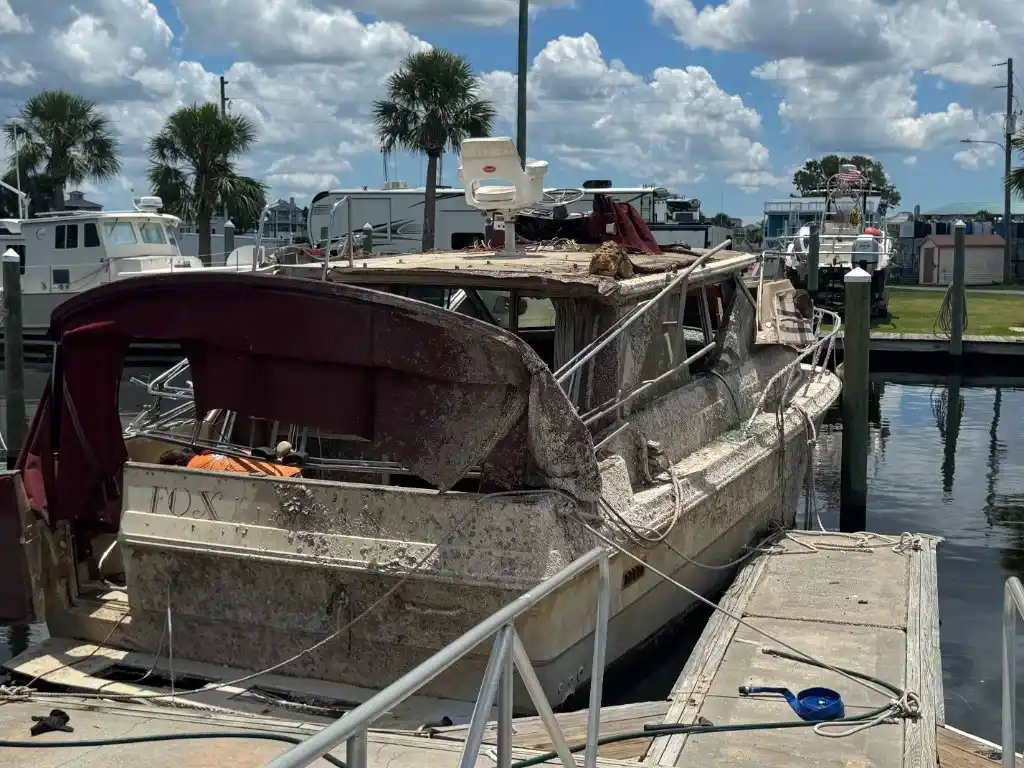
- Junk or end-of-life boats: hulls with soft decks, cracked fiberglass, stripped fittings, or damage that makes repair impractical. This is the usual starting point for junk boat removal.
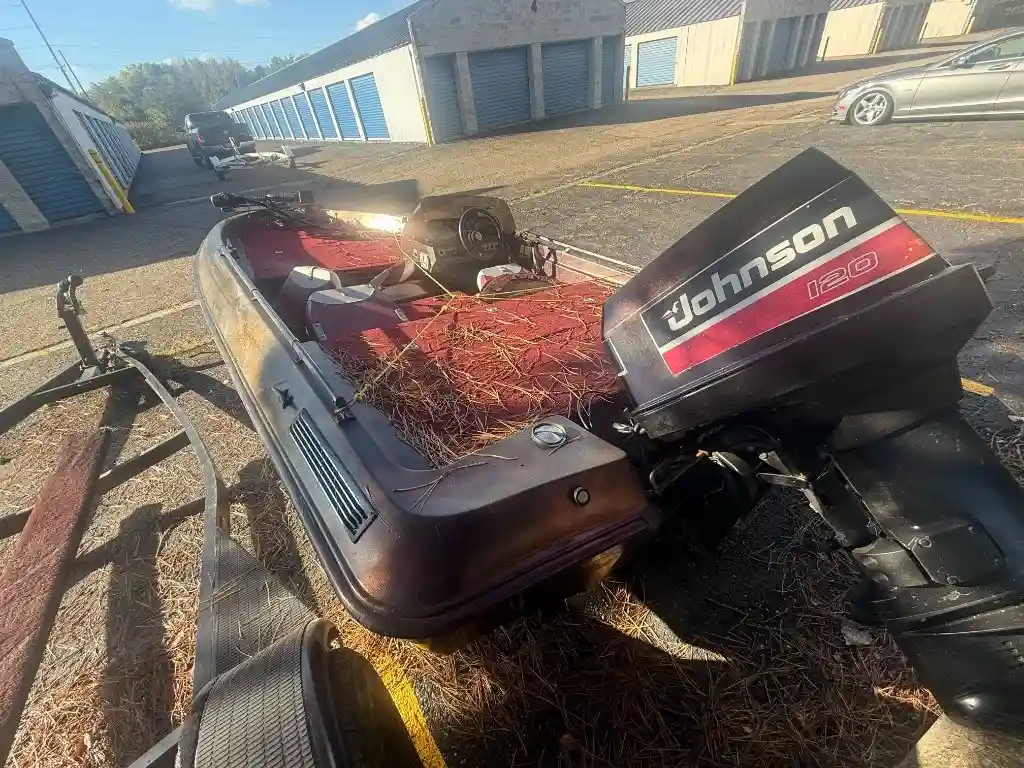
- Non-running vessels: boats with seized engines, missing outdrives, or dead electrical systems that cannot be moved under their own power.
- Boats with trailer problems: flat tires, seized bearings, rusted frames, or a trailer that cannot be legally or safely pulled.
- Sailboats and larger hulls: masts, rigging, keels, and weight all change how a project is planned, so sailboat disposal is scoped separately from a small powerboat.
- Personal watercraft and small craft: usually simpler to load, though condition and trailer status still matter.
If the vessel is already sunk or partly submerged, that is a different job. Ordinary removal from land or from an accessible marina position is not the same as recovery from the water, which needs its own review of depth, location, and access before anyone can say what is possible.
- All Vessel Types
Boat disposal scope
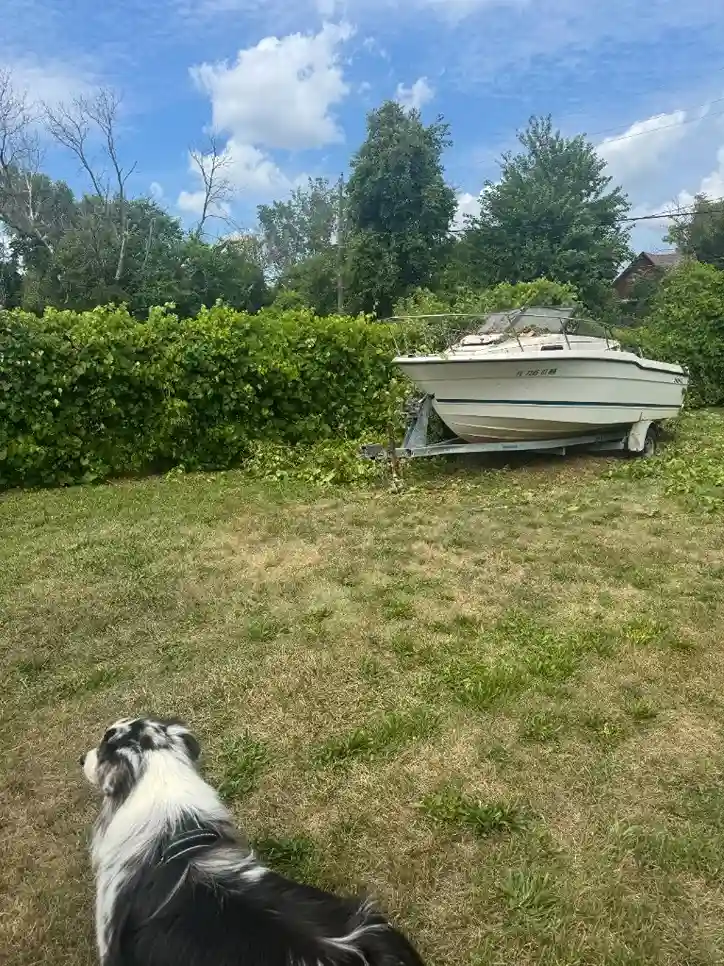
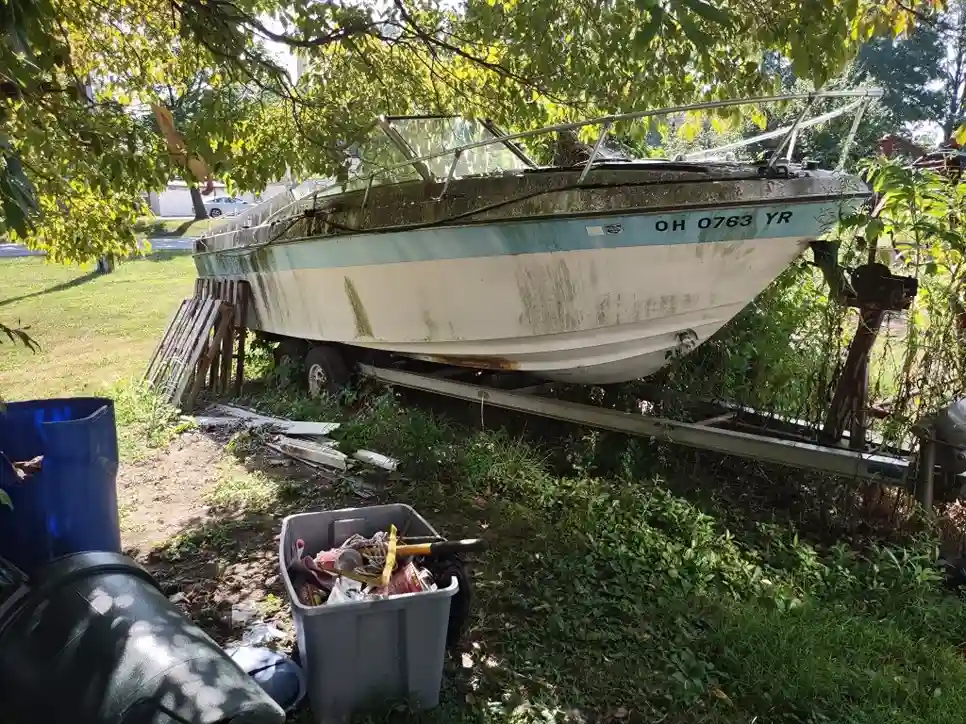
Many people searching for how to get rid of a boat assume the hard part is finding somewhere to take it. Often the harder part is access. Consider a fiberglass hull on a worn trailer beside a house in a residential Charlotte County neighborhood.
Before scheduling, we review access and define which parts of the job are included. Those parts can be loading, recovery, dismantling, hauling, trailer handling, transport, and disposal. They are not assumed. If a boat can be loaded whole, the plan looks different than one that must be taken apart on site because it is too fragile or too tightly placed to move intact.
Details that shape fiberglass boat disposal
Fiberglass hulls are bulky, and their condition affects handling. A solid hull on a sound trailer is a different task than a rotted, waterlogged one that may break apart when lifted. When you describe the boat, mention:
- the type of vessel and its approximate length, width, and height on the trailer
- whether the hull, deck, or stringers are damaged, and whether water has collected inside
- whether an engine, fuel tank, batteries, or loose gear are still aboard
- whether the trailer is included, and whether it rolls and has a usable title or paperwork
We do not name a disposal destination, equipment type, crew size, or completion time before a project has been reviewed. Those depend on the actual vessel and site.
Waterfront properties and the Peace River area
Peace River runs near Harbour Heights, and some owners may have a vessel kept at a waterfront property or a marina connected to the river. Mentioning a waterway does not mean a site is served or that any public facility can be used for a job. If your boat is in the water or at a managed dock, tell us who controls the property, what rules apply to contractors, and whether the vessel can be reached safely from land or from a loading point.
Property managers, marinas, and storage facilities should also confirm who authorizes the removal, what site restrictions apply, which items must stay or leave, and who is responsible for disposal. Settling these points early prevents delays on the day of work.
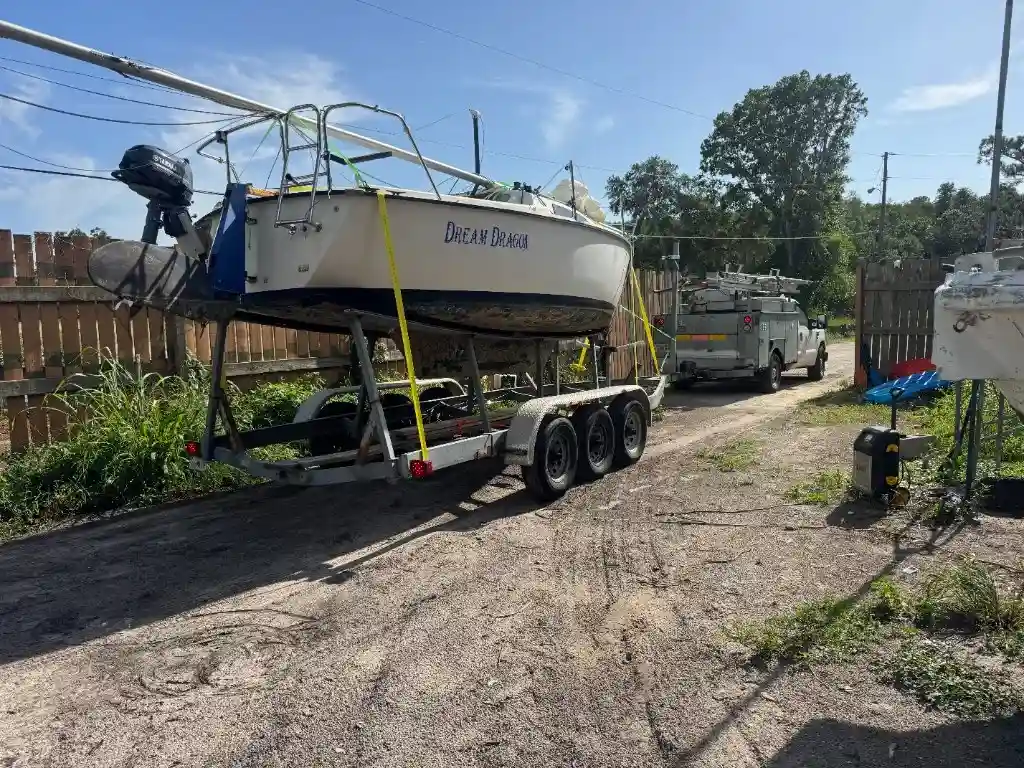
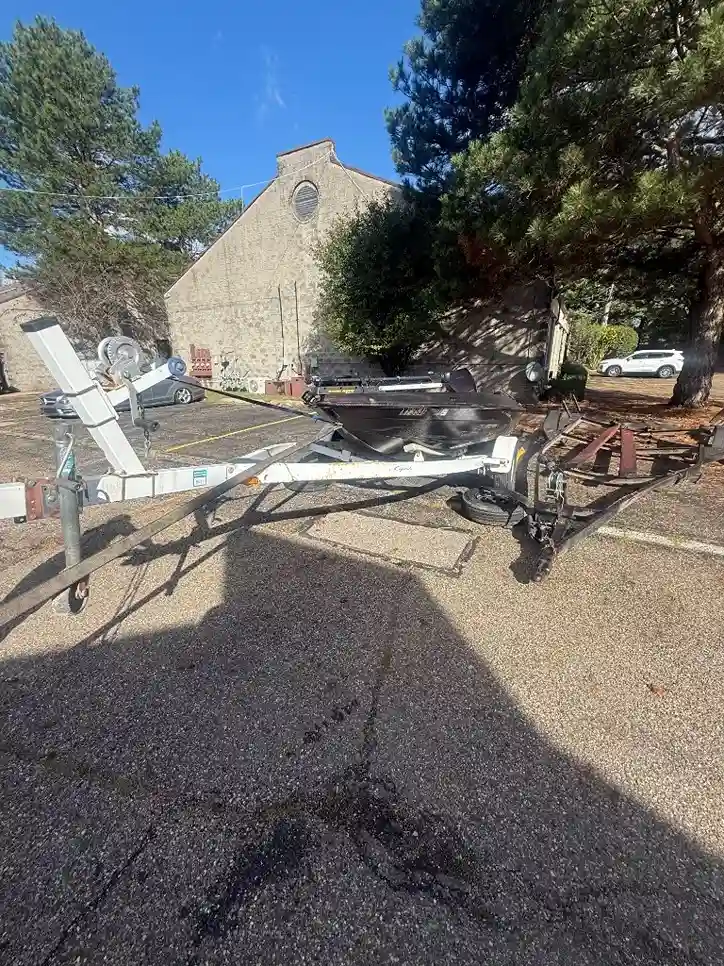
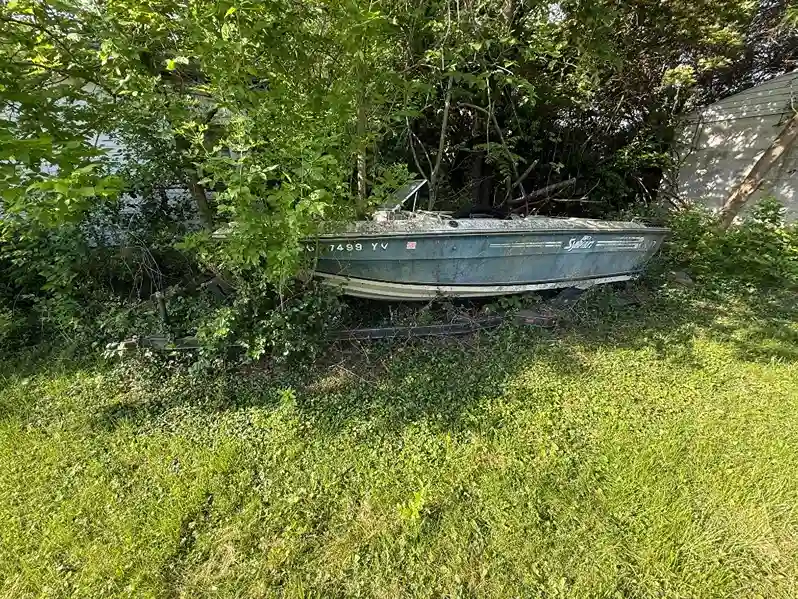
Request a boat removal quote
The quote request is free. Removal, recovery, transport, and disposal are not automatically free, and we do not publish a flat price. Anyone wondering about boat disposal cost should know that the estimate depends on the project: vessel size and condition, exact location, access route, equipment needs, trailer condition, recovery requirements, transport distance, and disposal scope.
What to send
- Vessel type and size: boat, sailboat, or personal watercraft, with approximate dimensions.
- Condition: running or not, structural damage, water intrusion, and what is still on board.
- Trailer status: whether there is a trailer, and whether it can be towed or loaded.
- Exact location: street-level or site details, plus whether the boat is on land, at a dock, or in the water.
- Authorization: confirmation that you own the vessel or are authorized to release it.
- Access details: gates, narrow drives, overhead lines, soft ground, parking limits, and site rules.
- Safe photographs: clear shots of the whole boat, the trailer, and the approach path, taken without entering unstable areas or going near the water.
What the estimate should spell out
A useful estimate states which services are included, such as loading, dismantling, hauling, trailer handling, and disposal, and which are not. It should describe any access or site conditions that affect the work and note what must be cleared or removed before the crew arrives. Keep the agreed access route clear and confirm what stays on site and what goes. If anything changes after review, the scope should be updated before work is scheduled.
For a broader overview, see the Boat Removal & Disposal service hub or the Florida service areas page. Owners comparing other locations can also read about Boat Removal & Disposal in Cleveland and Boat Removal & Disposal in Solana. Listing a place on these pages does not guarantee availability; each request is confirmed individually.
Common Removal Situations
Every vessel cleared from a property goes directly to a facility to be drained, broken down, and processed for scrap or landfill disposal.
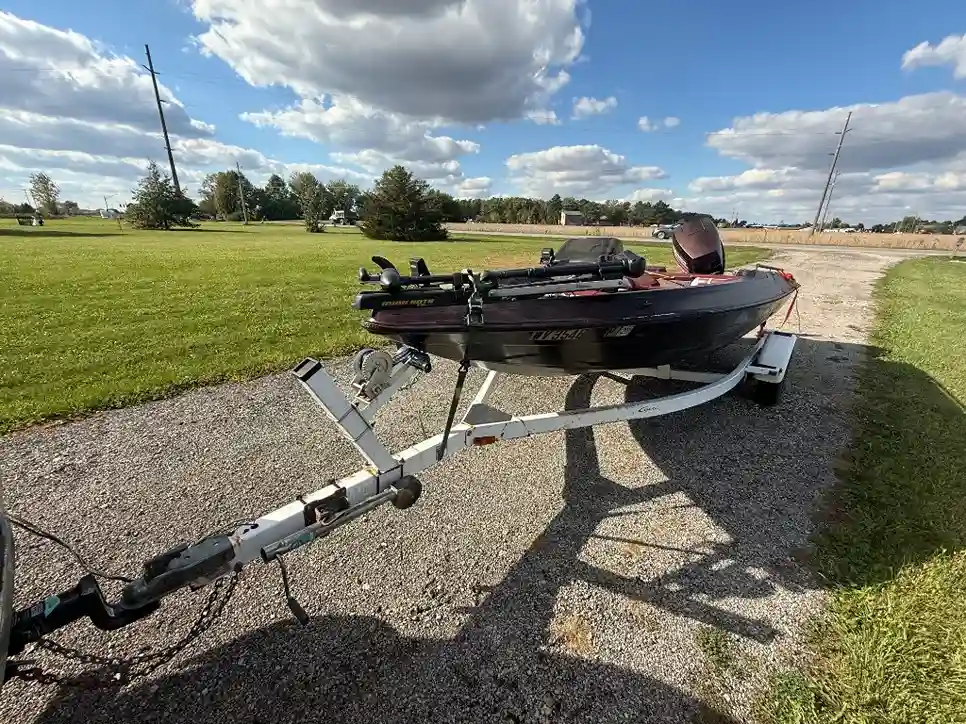
- A boat sitting unused on a trailer that no longer runs.
- A weather-damaged sailboat or powerboat beyond any reasonable repair.
- A derelict vessel left sitting at a marina slip or stored in a yard.
- A sunken or grounded hull blocking water access and causing a safety hazard.
- A property owner who needs an unwanted boat removed to free up space.
- FAQ
Service Questions
Get answers to common questions about boat removal in Florida.

Request a project-specific removal quote
Send current vessel and access details, along with safe photographs and ownership or authorization information, through the contact page, or call (904) 946-4709. The quote request is free, but the work is not automatically free, and availability is confirmed for each project.
On the scheduled day, the crew backs up the trailer, winches the vessel out, and leaves a clean, open space behind. To get started, send photos of the boat along with details about where it sits and any access obstacles. You will get an estimate before any work begins, and the crew handles the entire removal.