
Boat removal and disposal in Buckingham, FL

- The Florida Spirit
Boat removal service in Buckingham
A boat that no longer runs, no longer floats well, or no longer has a purpose tends to become a property problem. Florida Boat Services reviews boat removal requests across Florida, including requests tied to Buckingham. We confirm availability and final scope for each project rather than assuming it from a map.
Boat removal here means a defined plan for unwanted, damaged, non-running, or end-of-life vessels. Depending on what the quote confirms, that plan may include loading, dismantling, hauling, trailer handling, and disposal. Not every project needs every step. A small fiberglass skiff on a sound trailer is a different job from a cabin cruiser with a collapsed cradle, and the quote should say which pieces apply to yours.
A preparation scenario: the boat that sits behind the gate
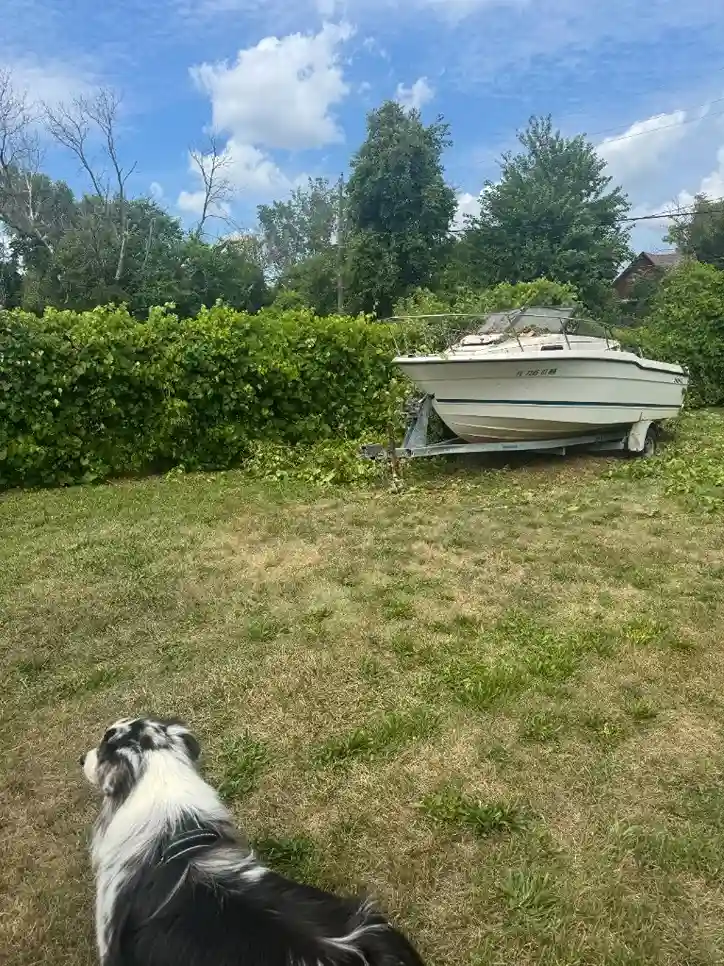
Consider a vessel stored on private land a short drive from the Caloosahatchee River. The river may be nearby, but the boat never touches it. The real questions are about the property. How wide is the gate? Is the ground firm enough for a heavy hauling rig after rain? Are there overhead lines, low branches, or parked vehicles along the route? Who has the authority to approve the work? Answering these before anyone schedules a visit prevents wasted trips and unclear scope.
Land or accessible-marina removal versus submerged recovery
These are separate kinds of work and should not be quoted as if they were the same. Ordinary removal covers a vessel that can be reached on land, on a trailer, or at an accessible dock or yard where loading can be coordinated. Submerged-vessel recovery involves a boat that has sunk or is partly underwater, which brings different recovery requirements before any hauling or disposal can begin. If your boat is in the water, say so plainly in your request and include safe photographs taken from the shore or dock. Please do not enter the water or step onto an unstable hull to get a better picture.
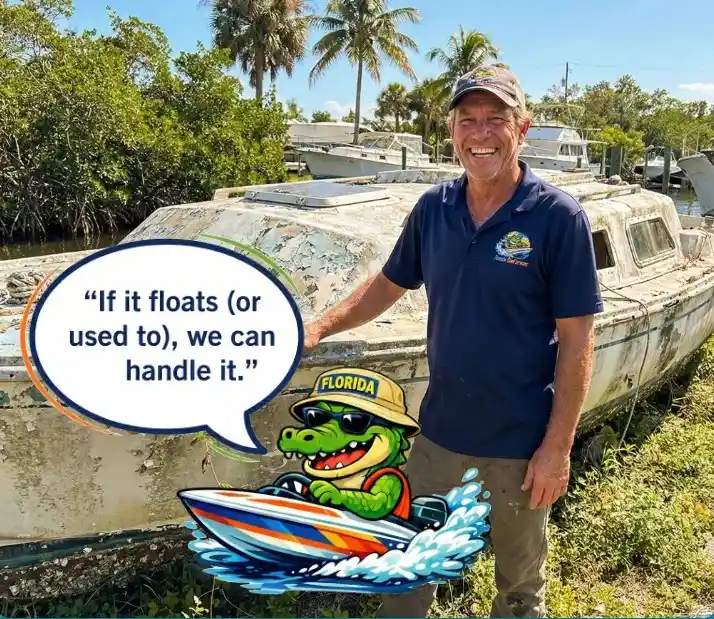
- All Vessel Types
Boat disposal scope
Boat disposal is the final stage of a removal project, and its scope depends on what the vessel is made of and what condition it is in. Fiberglass boat disposal usually involves a large, bulky hull that may need to be cut down or broken apart before it can be moved. Sailboat disposal adds a mast, rigging, and often a keel, which affect handling. Older aluminum or wood boats come with their own considerations. A quote for junk boat removal should name the disposal step explicitly instead of leaving it implied.
Conditions that get reviewed
- Vessel type and size: boat, PWC, or sailboat, with approximate length, width, and height on the trailer if there is one.
- Condition: whether the hull is intact, rotted, cracked, waterlogged, or partly dismantled already.
- Trailer status: whether a trailer is present, whether it rolls, and whether it is part of what should leave. For the Buckingham request, also say whether the starting point is near Davis Public Boat Ramp on Caloosahatchee River or on an inland property; the inventory reference does not confirm a loading point for the project.
- Contents: engines, fuel tanks, batteries, personal items, and loose gear that may need to be cleared or addressed before work begins.
- Location and access: the exact spot, the route in and out, surface conditions, and any site restrictions.
What affects boat disposal cost
Anyone searching for boat disposal cost will find that no honest number exists without details. Pricing is project-specific and depends on size, condition, location, access, equipment needs, trailer condition, recovery requirements, transport, and disposal scope. A quote request is free, but removal, recovery, transport, and disposal are not automatically free. The estimate you receive should list what is included and what is not, so you can compare it with your own expectations instead of guessing.
A professional review can clarify that before you commit.
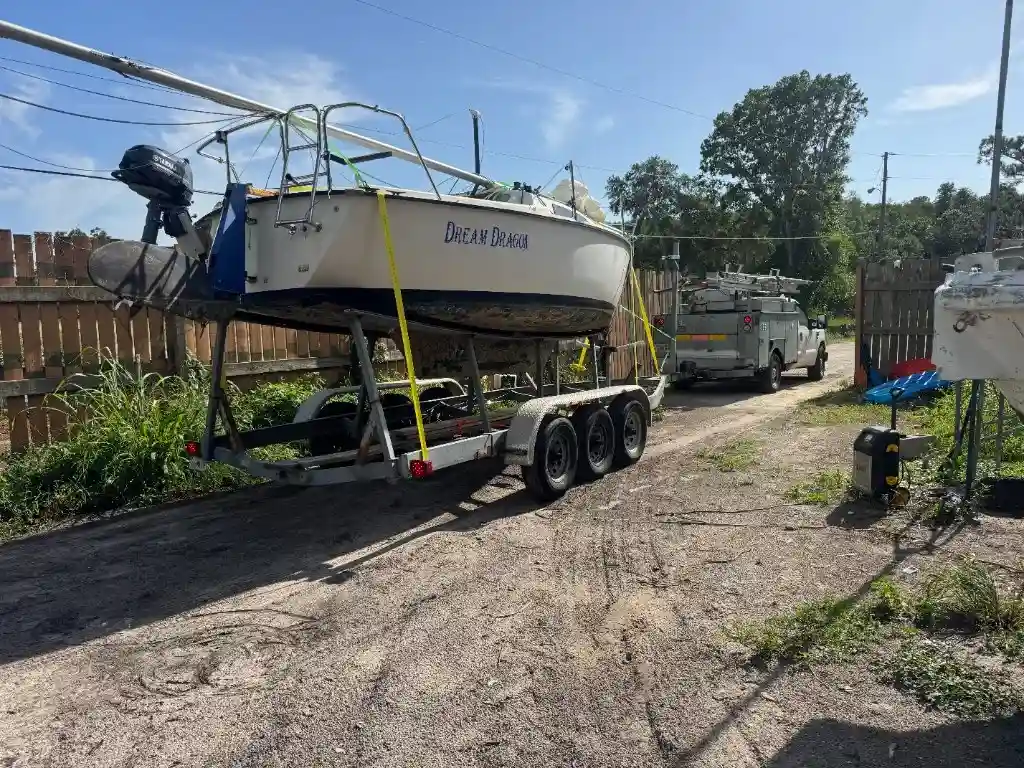
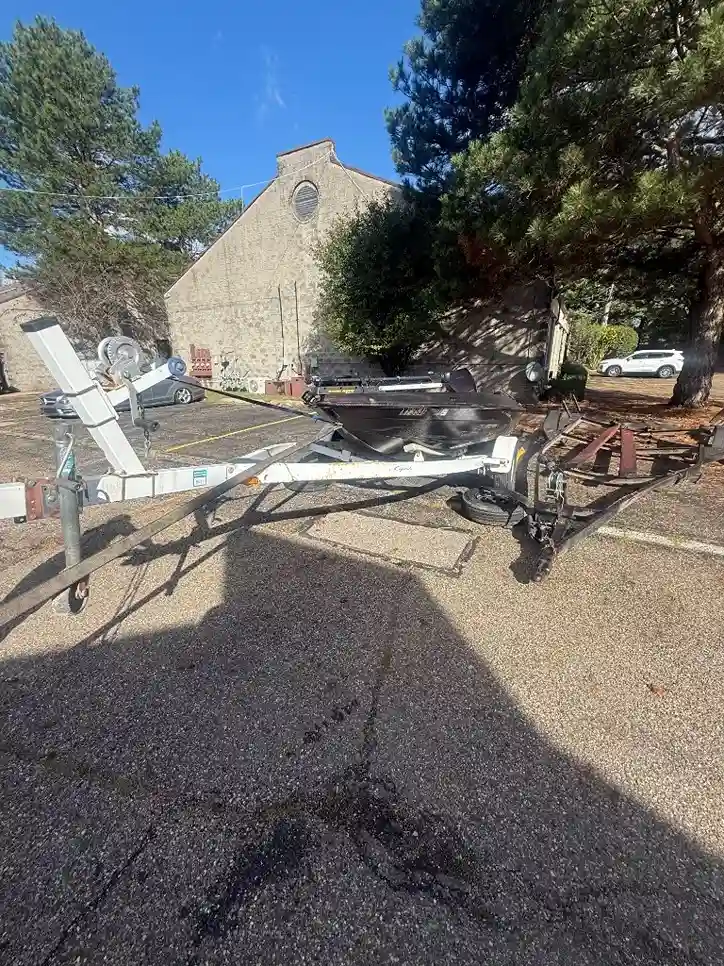
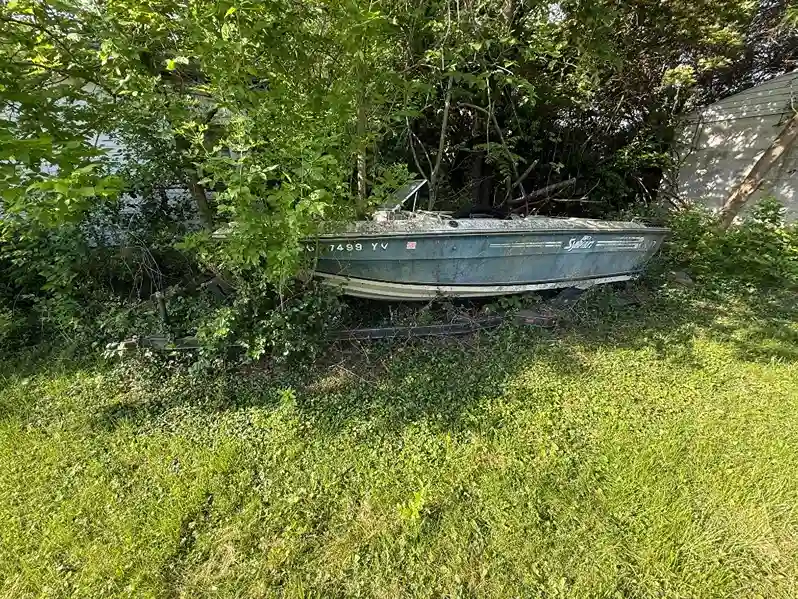
Request a boat removal quote
The fastest way to get a usable estimate is to send complete, accurate information the first time. Through the contact page for a project-specific quoteFor local context, the FWC inventory identifies Davis Public Boat Ramp near Caloosahatchee River; that record does not confirm jobsite access or project availability.
- The type of vessel and its approximate size.
- Its current condition, including anything missing, damaged, or underwater.
- Whether a trailer is involved and what shape it is in.
- The exact location and the route a hauling vehicle would need to take.
- Your ownership or removal authorization.
- Any gate codes, site rules, or time limits.
- Several safe photographs showing the whole vessel, the surrounding space, and the access route.
For property managers, marinas, and storage facilities
If a vessel is occupying managed property, the request works best when it comes from someone who can confirm authorization. Provide the site contact, facility restrictions, the complete item list, and who is responsible for clearing the access route. Clarify early whether disposal responsibility sits with the owner, the property, or the facility, since that shapes the scope and the paperwork around it. We do not provide legal advice, so questions about abandoned-vessel procedures should go to the appropriate authority or an attorney.
Before work is scheduled
Once we review your details, we confirm availability, define which of loading, recovery, dismantling, hauling, trailer handling, transport, and disposal are included, and note what must stay or leave. Keep the agreed access route clear so that nothing changes on the day of work. Availability for Buckingham is confirmed project by project; we do not operate a local office there and cannot promise a particular schedule before review.
If your vessel is in a neighboring community, you can also read about Boat Removal & Disposal in Verandah or Boat Removal & Disposal in Olga. For a broader view, see the Florida service areas index or return to the Boat Removal & Disposal service hub.
Common Removal Situations
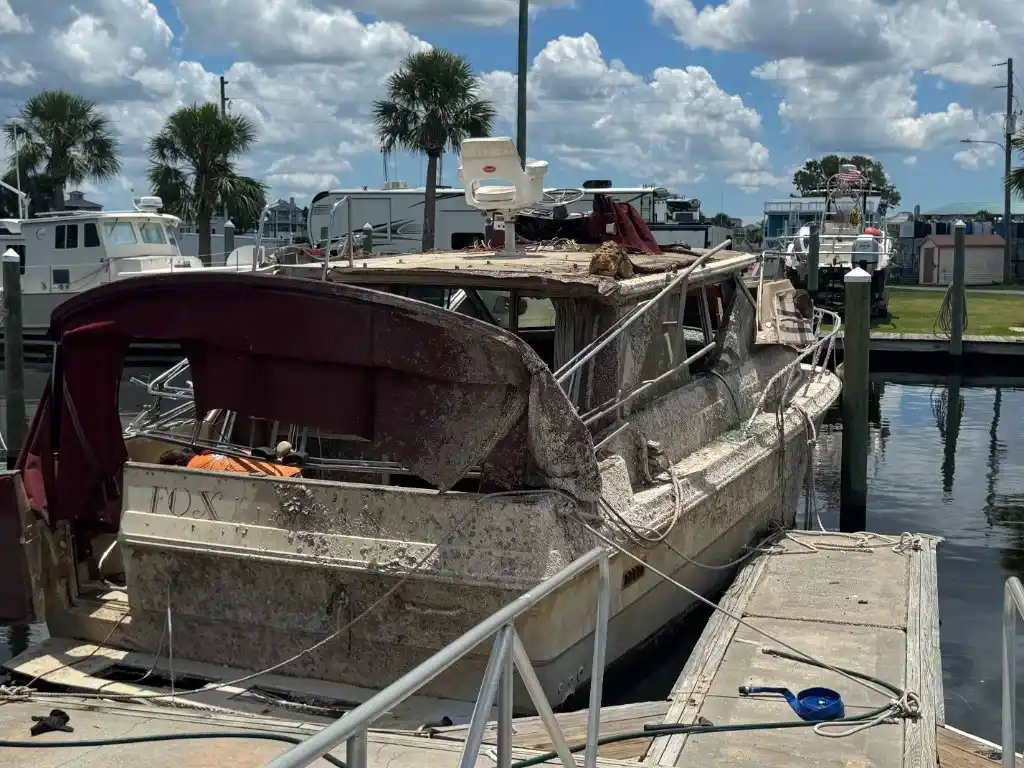
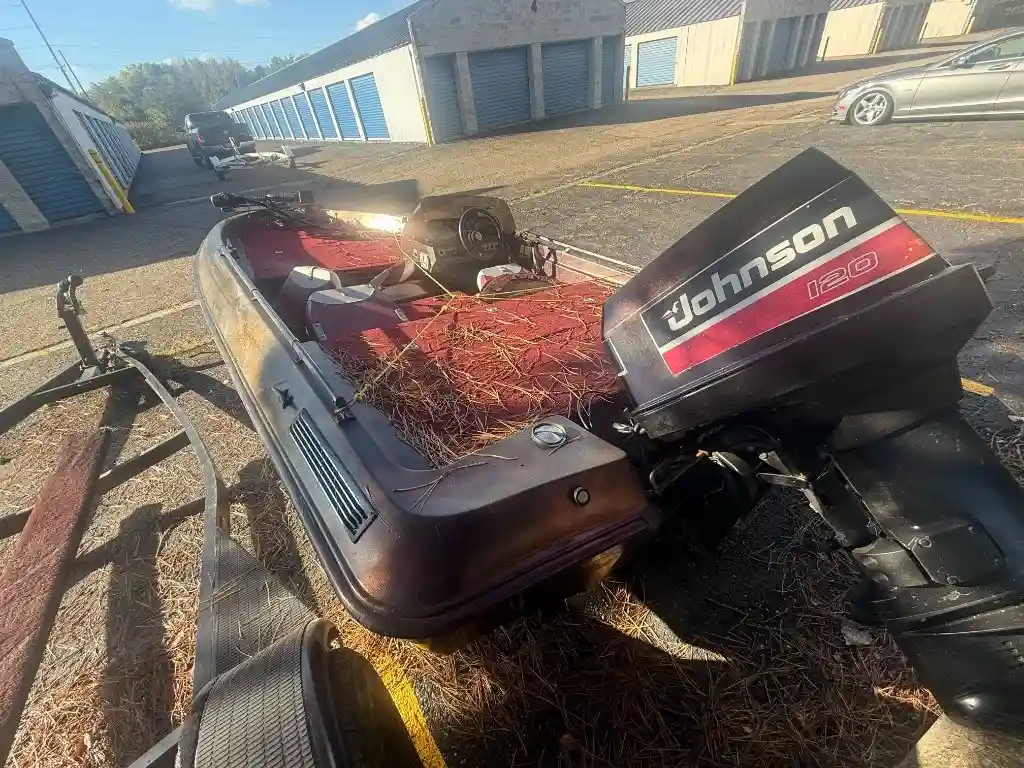
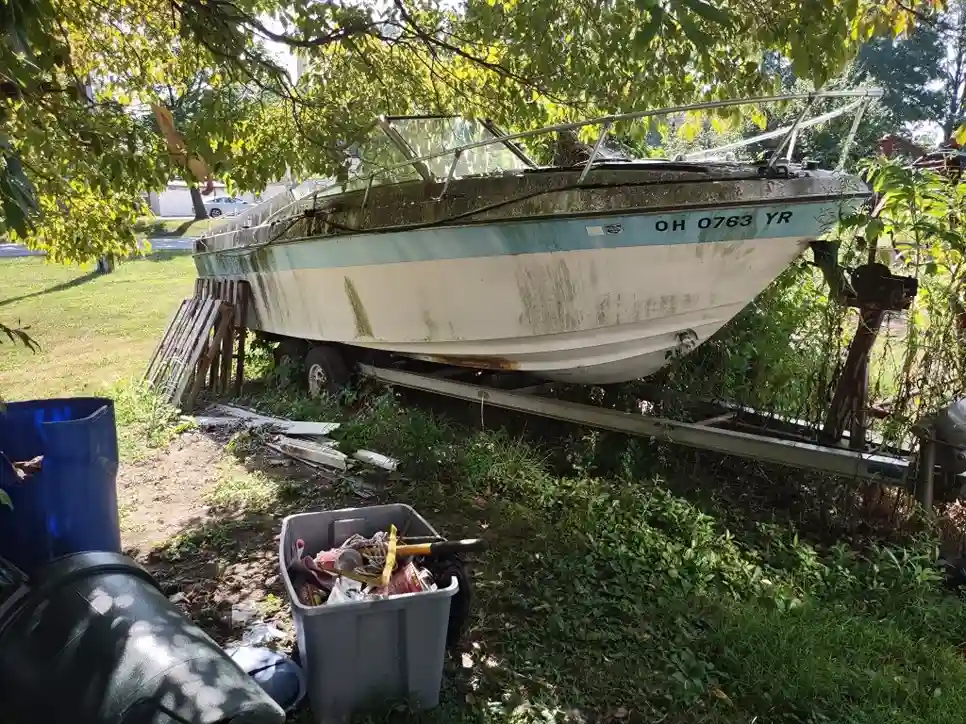
Hulls holding rainwater, cracked gelcoat, soft decks, and frozen steering cables usually mark the point when a vessel needs to go.
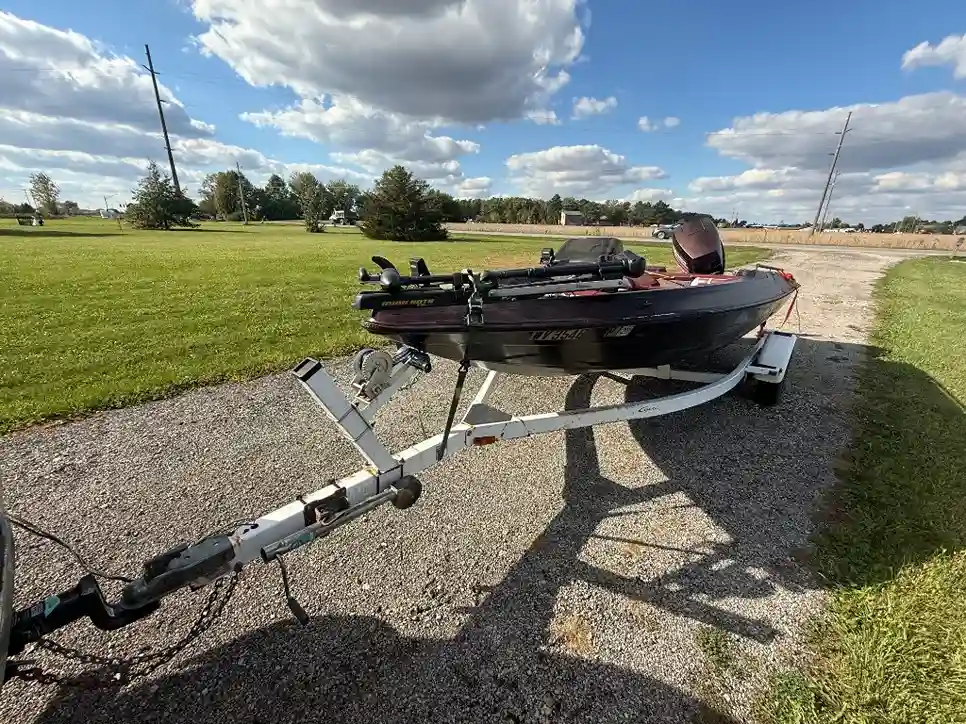
- Powerboats and motor craft: Units with inoperable engines, rotten transoms, or those sitting unused on flat trailer tires.
- Sailboats: Delaminated hulls, stripped rigging, or structural damage that makes restoration impractical.
- Derelict vessels: Abandoned craft sitting at marina slips, storage yards, or tucked away on private property.
- Navigational hazards: Vessels creating safety issues or blocking water access, docks, and launch ramps.
- Unwanted watercraft: Clear titles or nameless hulls where the owner simply wants the space cleared.
- FAQ
Service Questions
Get answers to common questions about boat removal in Florida.

Request a project-specific removal quote
Send current vessel and access details for a project-specific estimate. The quote request is free, but the work is not automatically free. You can also call (904) 946-4709 to ask about your Buckingham project.
You keep the signed bill of sale and destruction documentation without spending your weekend dragging a rotted hull to a landfill that might reject it. Send photos, describe the vessel, and tell us where it sits. You get an upfront estimate before any work starts, then the crew handles the hauling, loading, and disposal.